Digestive comfort.
Designed to support digestion through your gut–brain connection.
 Join the waitlist
Gut health meets neuroscience
Meet Nevia®, a gut-health wearable designed to support digestive comfort and everyday calm through non-invasive, dual-site vagus nerve stimulation.
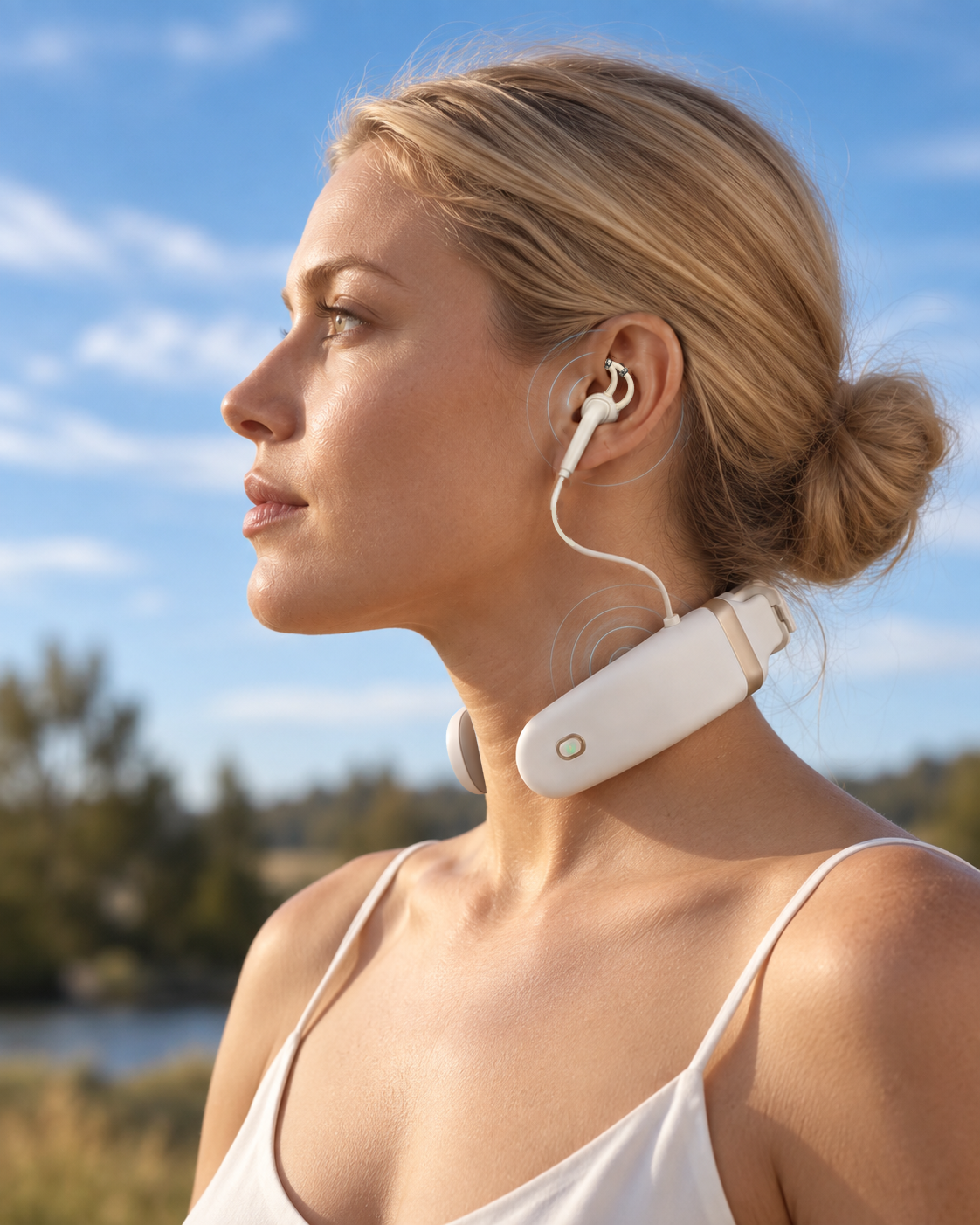
More room for what matters
We’re building Nevia to make everyday gut care simpler.
Designed to support digestion through your gut–brain connection.
A moment for yourself, built around the body’s “rest and digest” pathways.
Two minutes, twice a day.
Your everyday Nevia
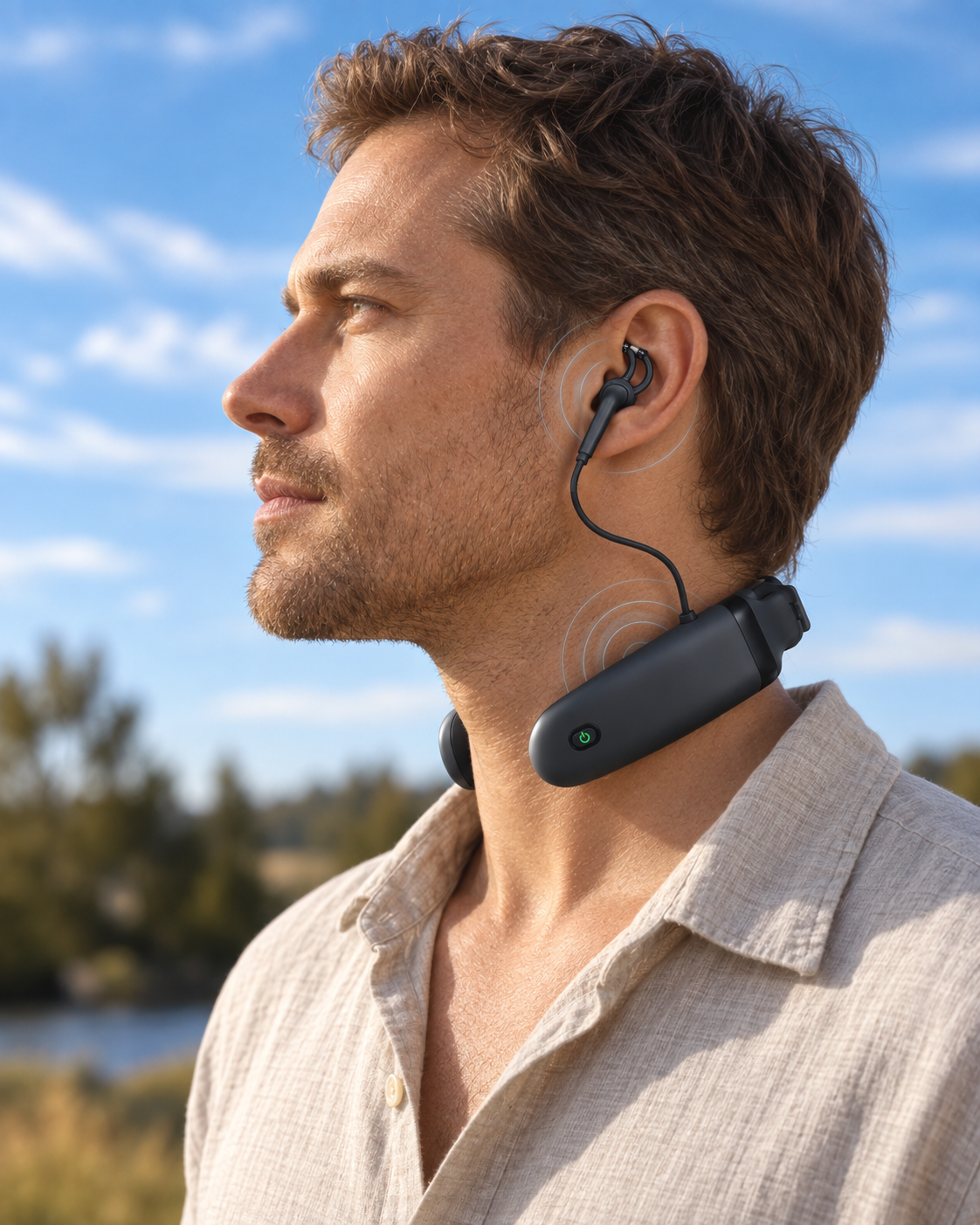
Fit the neckband and place the earpiece in your left ear.
Let the app guide your two-minute session.
Morning and evening. Track your gut-health patterns in the app.
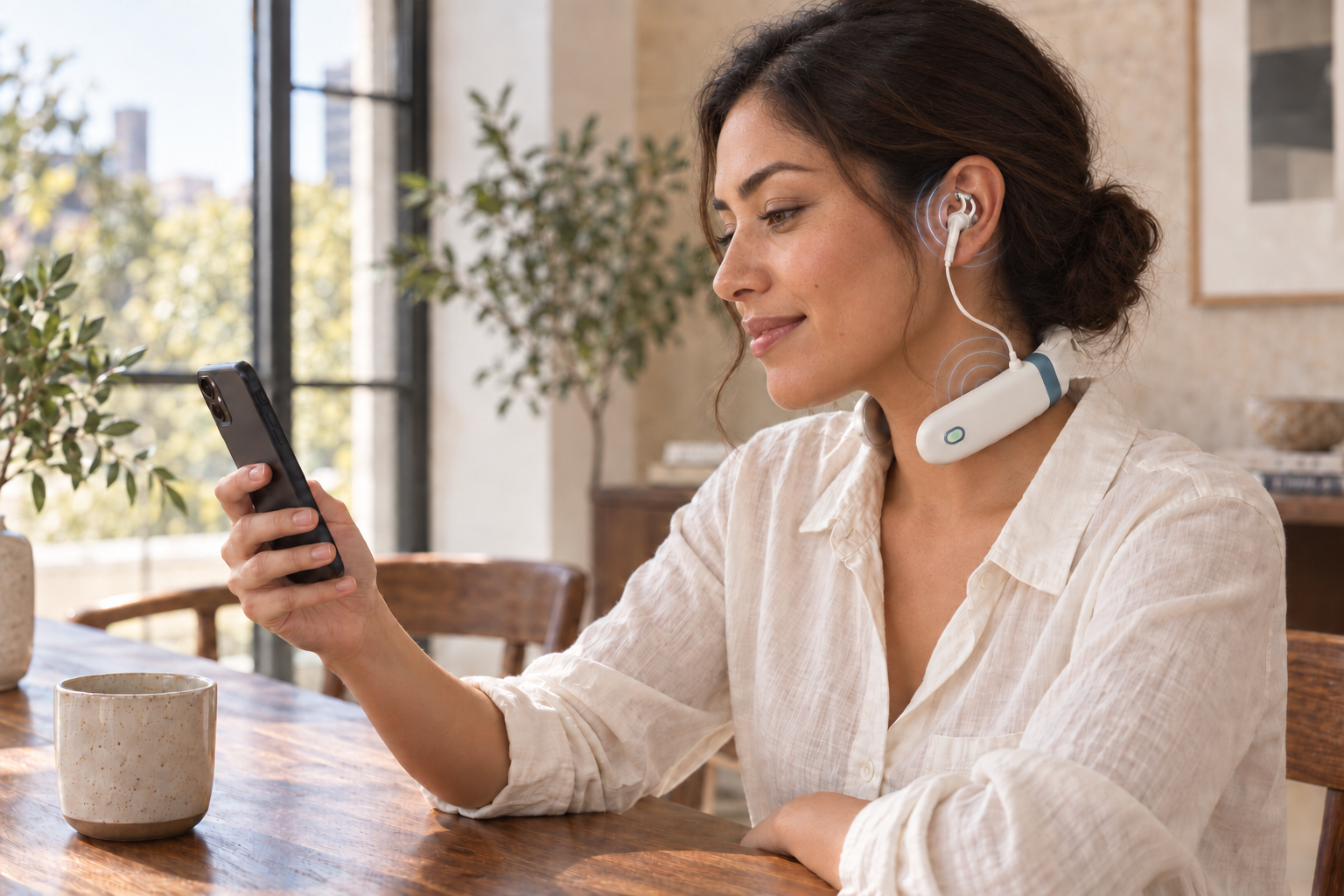
How Nevia® works
The connected earpiece and neckband target the vagus nerve at your left ear and neck.
Inner pathways

Tap the labels to explore how Nevia® works.
Follow the connection
The earpiece sits in the upper bowl of your left ear (cymba concha), targeting a sensory vagus nerve branch that carries signals to the brainstem.
Explore ear-stimulation researchThe neckband wraps around your neck, stimulating through the skin on the left side to target the cervical vagus nerve beneath.
Explore neck-stimulation researchThe brainstem processes incoming signals and helps coordinate digestion through vagal pathways.
See the human studiesThe vagus nerve branches toward the stomach and intestinal nervous system, carrying signals between your brain and gut to help coordinate digestion.
Explore gut-health researchPublished research · Ear & neck stimulation
Human studies have explored ear and neck stimulation for digestion, stress response and sleep.
64%
Lower average belly-pain scores than the comparison group after four weeks.
IBS with constipation · 42 randomized
See the study3×
As many complete, unassisted bowel movements: 2.8 per week versus 0.9 in the comparison group.
Same IBS trial · Four weeks
See the study76–81%
Met the study’s symptom-improvement target, versus 47% in the comparison group.
300 adults with persistent indigestion · Four weeks
See the study40%
Met the study’s symptom-improvement target: 6 of 15 participants.
Gastroparesis, a stomach-emptying disorder · At least four weeks
See the study5.7%
Lower heart-rate response to traumatic stress than the comparison group.
25 adults with PTSD · Three-day laboratory study
See the study69%
Cut their sleep-problem score by at least half, versus 28% in the comparison group.
72 adults with chronic insomnia · Eight weeks
See the studyPublished studies of other vagus nerve stimulators inform Nevia’s approach. Explore the studies, devices and routines behind these findings.

From symptoms to everyday life
The IBS trial also found better quality-of-life scores, using a questionnaire covering daily activities, food avoidance and relationships.
Higher IBS quality-of-life score than the comparison group.
83.2 versus 69.5 on a 0–100 scale.
Digestion · 300 adults · 4 weeks
This randomized trial compared two ear-stimulation settings with sham, a treatment designed to imitate stimulation. Response rates were 81.2% at 10 Hz, 75.9% at 25 Hz and 47% with sham. Response meant at least a five-point drop in symptom scores, not complete relief. Sessions lasted 30 minutes, twice daily, for four weeks.
Both stimulation groups also improved more on the Short-Form Nepean Dyspepsia Index, which measures indigestion’s impact on daily life. The overall scores do not establish specific gains in social outings or meals with friends.
Shi et al. · American Journal of Gastroenterology · 2024 ↗︎Author-shared full paper, including quality-of-life results ↗︎
Ear stimulation · IBS with constipation · Four weeks
Of 42 people randomized, 40 completed the study. Pain scores averaged 1.1 versus 3.1 with sham on a 0–10 scale: 64% lower. Complete spontaneous bowel movements averaged 2.8 versus 0.9 weekly: about three times as many.
The 13.7-point quality-of-life difference comes from group averages of 83.2 versus 69.5; higher is better. Individual questionnaire areas were not separately reported as improved.
Sessions lasted 30 minutes twice daily at a single study center.
Another four-week randomized trial in 40 adults with IBS and constipation found better pain, bowel function, anxiety, depression and quality-of-life scores with ear stimulation versus sham.
Liu et al. · American Journal of Gastroenterology · 2025 (online 2024) ↗︎
Neck stimulation · Gastroparesis · Early pilot
After at least four weeks of neck stimulation, average digestive-symptom scores fell from 2.56 to 1.87. Six of 15 participants met the response target: a drop of at least 0.75 points.
Without a control group, the study cannot attribute improvement to stimulation. Overall health did not significantly improve. Findings concern gastroparesis specifically.
Gottfried-Blackmore et al. · Neurogastroenterology & Motility · 2020 ↗︎
A neck-stimulation trial in people with diabetes and nerve damage found no clear digestive-symptom advantage over sham. These gut studies did not test Nevia’s combined device or two-minute routine.
Among 2,013 U.S. adults with IBS surveyed by AGA/Harris Poll, 77% avoided places with limited bathroom access, 72% struggled to plan around unpredictable symptoms, and 58% spent less time with loved ones.
These describe IBS’s impact, not stimulation outcomes. The online survey ran in 2024 and was released in 2025, supported by Salix Pharmaceuticals.
In 72 adults with chronic insomnia, 69.4% receiving ear stimulation reduced their Pittsburgh Sleep Quality Index score by at least half after eight weeks, versus 27.8% with sham. Headline percentages are rounded.
Average score change, the primary outcome, was 4.2 points better than sham, with benefits at the 12-week follow-up. Sessions lasted 30 minutes twice daily, five days a week. The findings measure reported sleep quality, not extra sleep time.
In a randomized, double-blind study of 25 adults with PTSD, left-neck stimulation lowered heart-rate response to traumatic stress by 5.7% versus sham. This measures physical arousal, not emotional well-being.
Thirteen received stimulation and 12 received sham during a three-day laboratory study using two-minute applications. Findings support further research into stress regulation; everyday anxiety relief was not established.
Two small add-on studies in 37 adults with depression found improvements in self-reported mood with ear stimulation. Clinician-rated scores showed no clear difference. Findings remain preliminary and mixed.
A small trial in 34 people with painful periods found less pain and fewer menstrual symptoms with ear stimulation than with sham. This early finding does not establish hormone balance, fertility or cycle-regulation benefits.
These studies used different devices, routines and patient groups. They do not establish Nevia’s benefits or show that gut improvement caused other wellness outcomes.
A review of 177 studies covering 6,322 participants found no causal link between ear stimulation and severe adverse events. Commonly reported effects included ear discomfort, headache and tingling.
Safety reporting was incomplete: more than half the studies did not state whether adverse events occurred. These findings concern ear stimulation with the studied devices, not Nevia’s combined neck-and-ear device.
A study of 22 young people with Crohn’s disease or ulcerative colitis reported improvements in symptoms and an intestinal inflammation marker. An initial randomized crossover phase was followed by active treatment for everyone through week 16.
The longer phase had no concurrent sham comparison. The sample was small and prospective endoscopic assessment was not included, so these findings remain preliminary.
Nevia brings neck and ear stimulation into one app-guided routine.
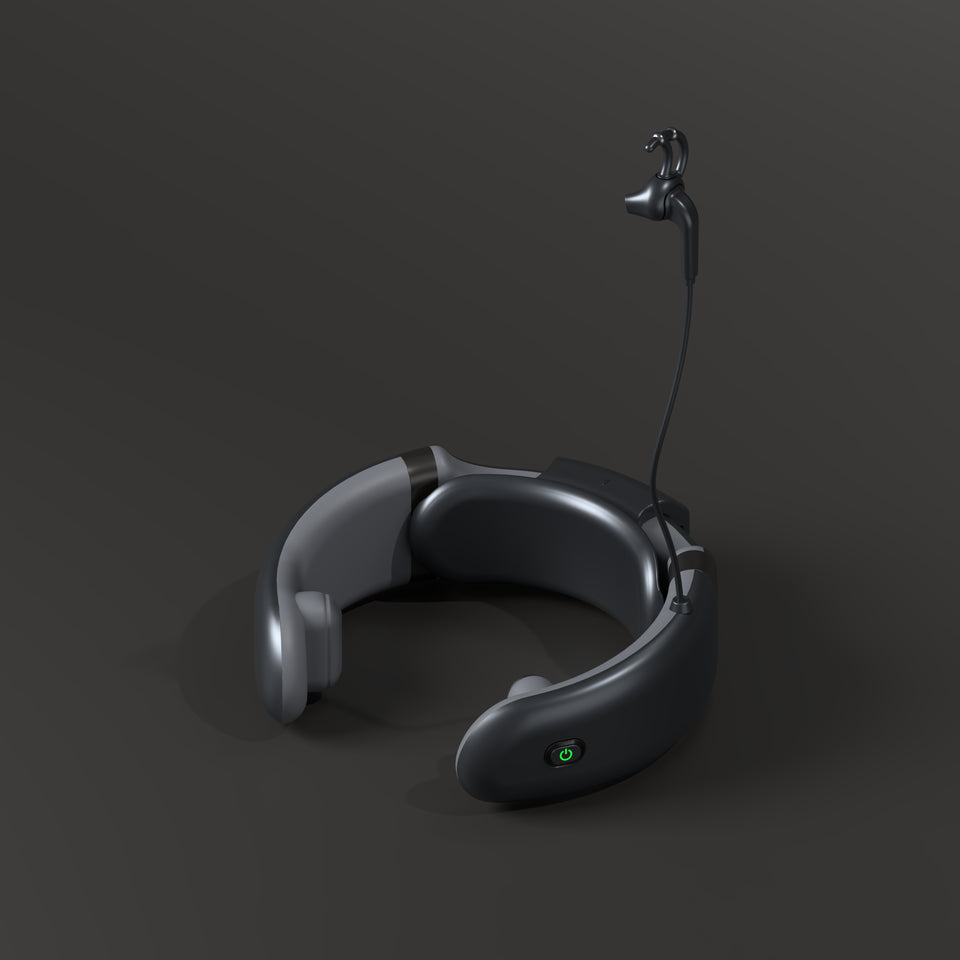
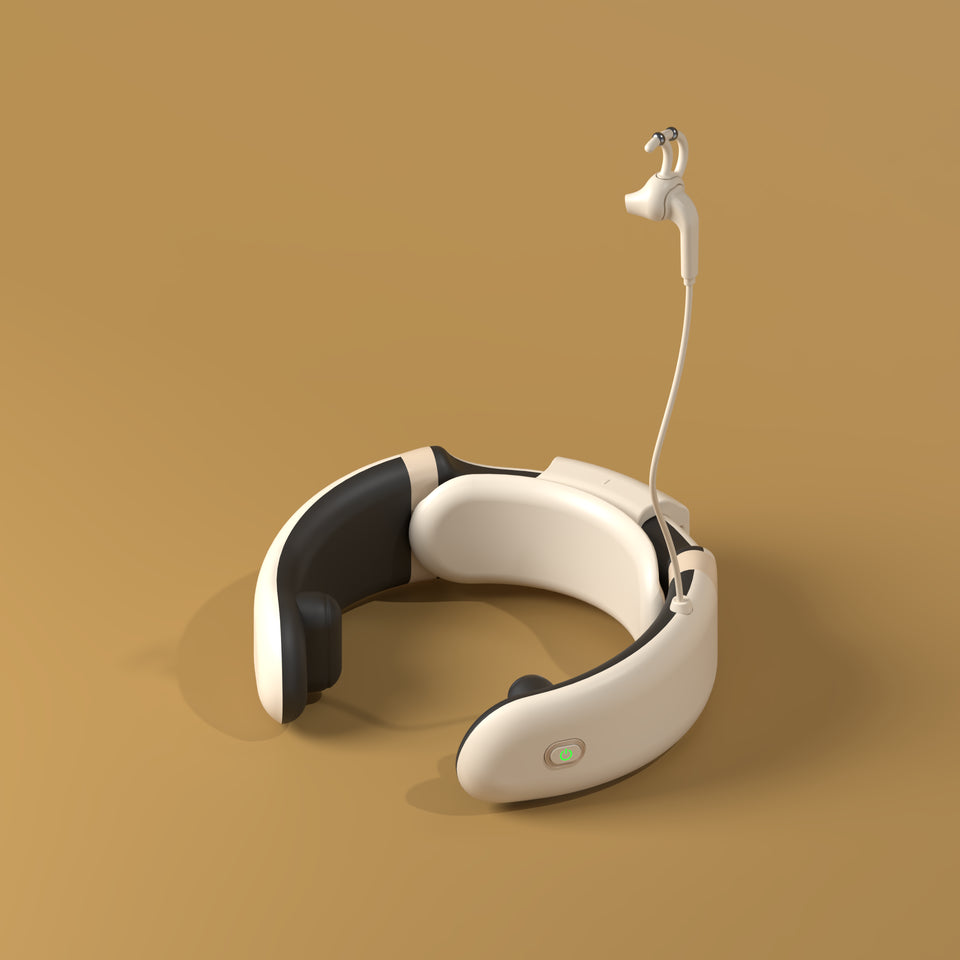
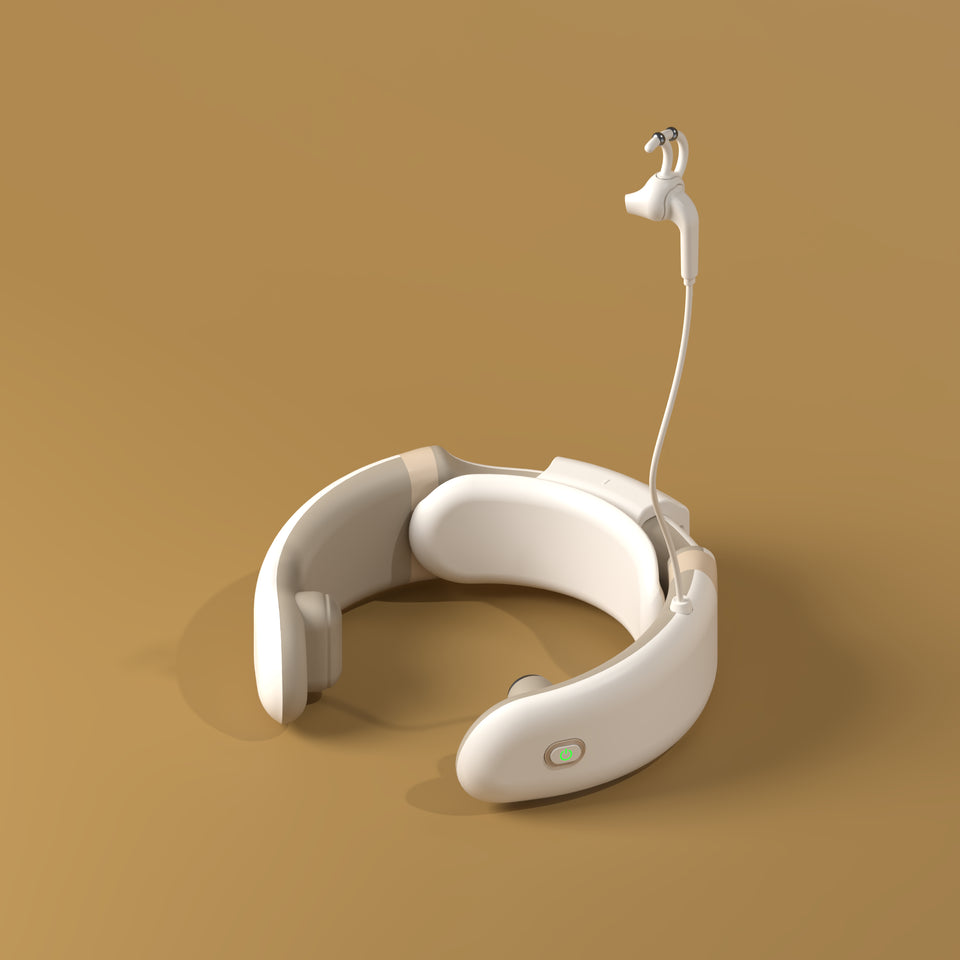
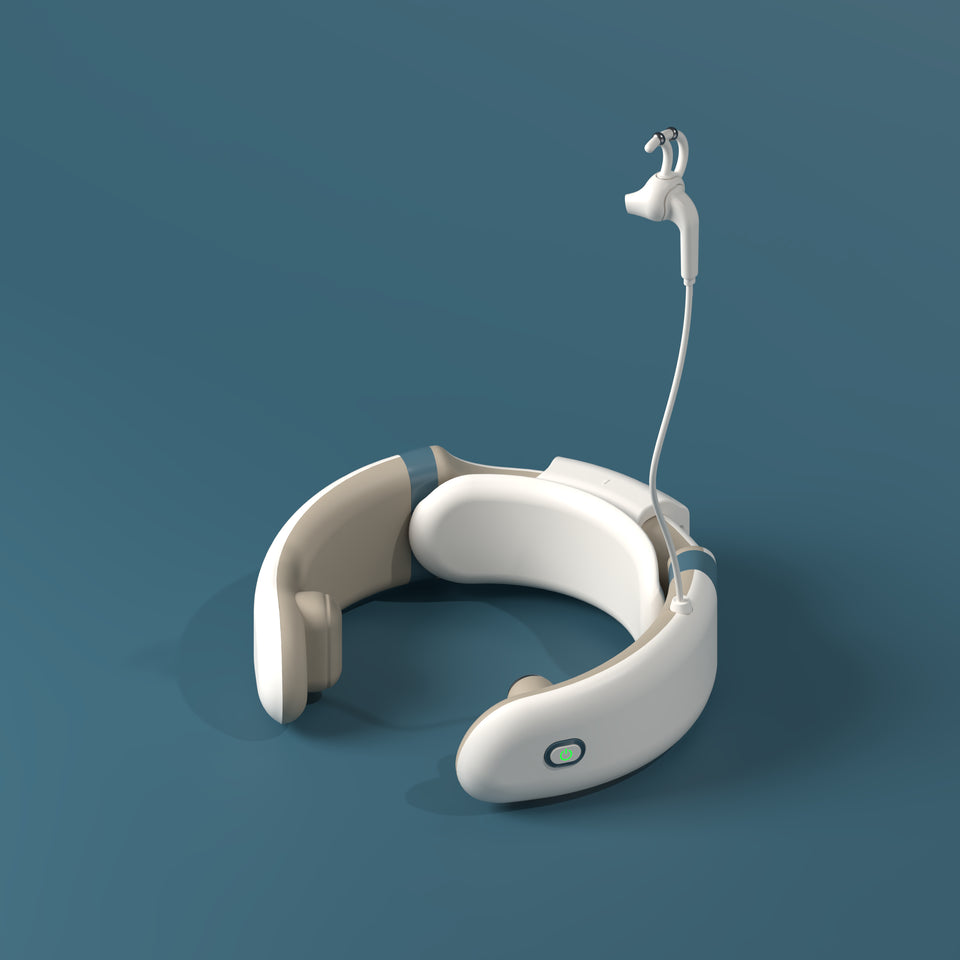
Four colors. One Nevia.
Choose the finish that feels like you.
Enteronova®
Experts in gut health, neuroscience and engineering. Focused on everyday gut care.

Founder & CEO
Enteronova®

Director, Clinical IBD Program
UW Medicine

Medical Director, IBD Center
Swedish Gastroenterology

Clinical Professor of Medicine; GI Motility
University of Washington

Co-Director, Center for Neurotechnology
University of Washington

Research Professor, Mechanical Engineering
University of Washington

Professor Emeritus, Mechanical Engineering
University of Washington

Gastroenterology
UW Medical Center

Gastroenterology
UW Medical Center

Two-time Emmy-nominated actress
Northern Exposure
Before you get started
A gut-health wearable in development, designed to support digestive comfort and everyday calm through non-invasive vagus nerve stimulation at the neck and ear.
Your gut and brain communicate through the gut–brain axis. The vagus nerve carries signals in both directions, making it central to Nevia’s approach. Explore the connection.
Two-minute sessions, twice a day, using the neckband, earpiece and companion app. Full instructions will be supplied at launch. Two minutes is the session length, not the time to results.
Nevia delivers electrical stimulation through skin contact. Before launch, we’ll share guidance on sensation, intensity, fit and first use.
No. Nevia is being developed as a general wellness product. It is not intended to diagnose, treat, cure, or prevent disease, or replace prescribed care. Ask your clinician about suitability, especially if you have a health condition or an implanted medical device.
Nevia-specific clinical results are not yet available. The published studies referenced here evaluated other devices and protocols.
Not yet. Join the waitlist for launch updates. We’ll share pricing and availability before orders open. Signing up is not an order.
Nevia works with a companion app. We’ll confirm app access, any recurring costs, included accessories, charging and care details before launch.
Be part of what comes next
Join the Nevia waitlist for launch updates and availability.